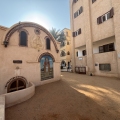
The Curia’s history traces back to 1907, when the Capuchin nuns were relocated to a new monastery at Via Sardegna-Piemonte after losing their original site due to Italian government policies. In 1950, the Curia was officially established at this location following the transfer of the nuns. Over the decades, the building underwent extensive renovations, including a major restructuring project completed in 2014, ensuring the space could meet the administrative and functional needs of the Capuchin Order. The Curia remains a vital hub for the Capuchin Friars’ global operations, combining historical significance with ongoing spiritual and humanitarian missions.
The General Curia of the Capuchin Friars in Rome, located at Via Piemonte 70, has been recognized as a “Casa di Vita” by the Raoul Wallenberg Foundation for its humanitarian efforts during the Nazi occupation. Under the leadership of Father Marie Benoît, the Curia became a sanctuary for over 4,000 Jews in France and Italy, providing false documents, shelter, and assistance to reach Allied lines. Father Benoît’s actions earned him the title “Righteous Among the Nations” in 1966. His profound respect for religious diversity was exemplified when he safeguarded the keys to Rome’s synagogue and reopened it after the city’s liberation in 1944.
- Address
Via Piemonte 70, Rome, Italy - Web
https://www.ofmcap.org/en/ - Visiting Hours
Monday to Saturday from 8:00 to 19:30 - What to see
Plaque at the entrance
AI Transparency Notice
PilgriMaps uses artificial intelligence tools to assist in the research, drafting and translation of editorial content. All AI-assisted content is reviewed, edited and verified by our editorial team before publication. We contrast information against primary sources, specialist literature and on-the-ground knowledge to ensure accuracy, cultural sensitivity and editorial integrity.
AI is one tool among many in our workflow. The judgement, curation and responsibility for everything published on this platform remain entirely human.
Viator Media S.L. — in compliance with the EU Artificial Intelligence Act (Regulation EU 2024/1689).
This post is also available in: