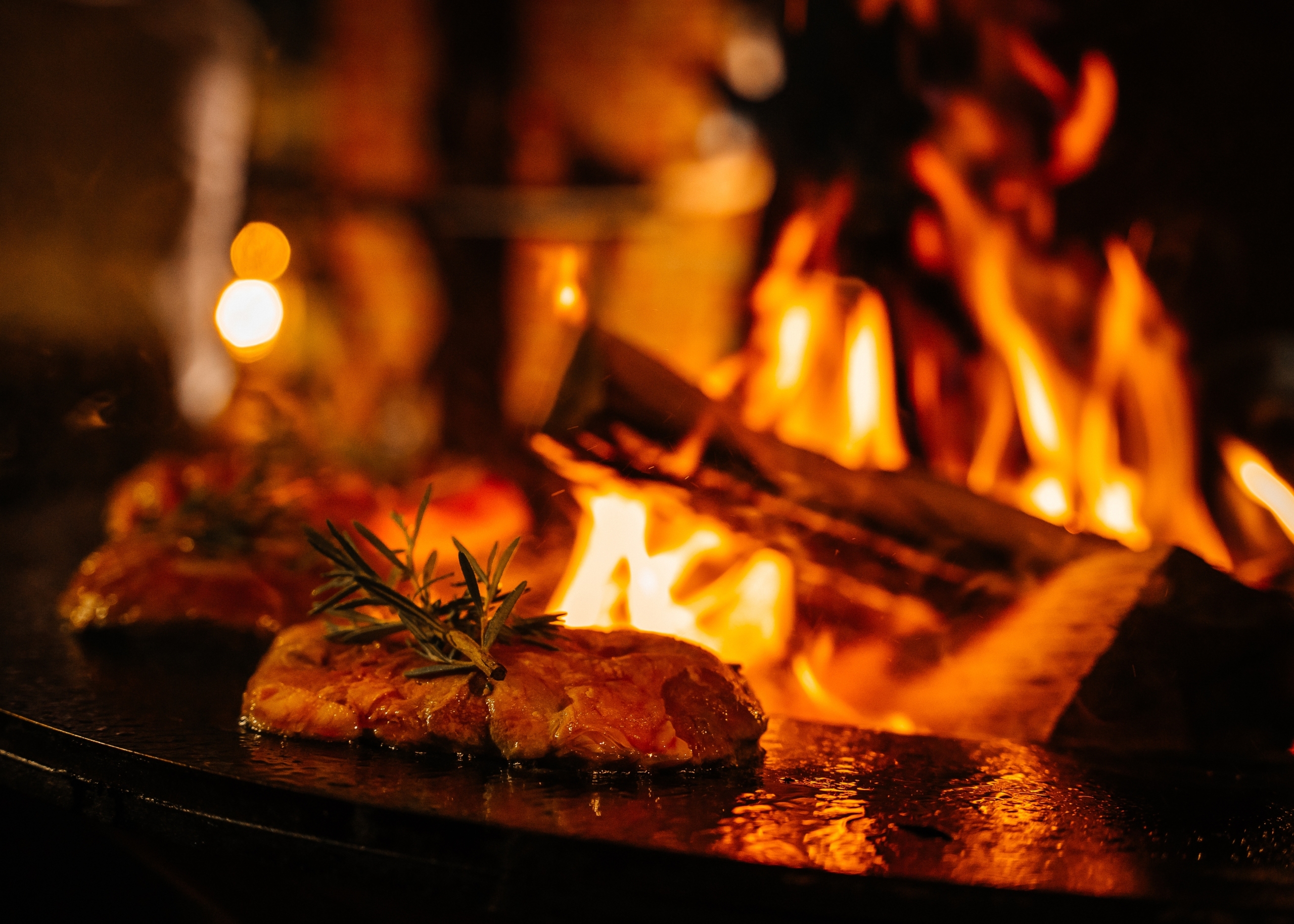
Across the boundless expanses of the Argentine pampas—where the sky seems to merge with the land in a perfect horizon—emerged one of South America’s most emblematic and enduring practices: the asado. While easily translated as a barbecue or grill, the asado is better understood as a ritualized act of communal life, a cultural institution forged through necessity and carried forward by collective memory.
As dusk falls over Buenos Aires and the first stars begin to surface, countless Argentine families gather around a fire. Few may reflect on the historical depth of what they’re enacting, but the tradition traces its lineage back to the earliest inhabitants of the pampas and the formative experiences of a country shaped by solitude, migration, and the harsh realities of rural life.
Riders of the Grasslands: Gauchos and the Origins of Asado
The story of the asado begins in the 18th century, alongside the rise of the gaucho—the semi-nomadic horsemen of the Argentine plains. Emerging from the cultural intersections between Spanish colonists and Indigenous communities, gauchos developed an autonomous lifestyle in one of the continent’s most remote terrains. Living mostly on horseback, sleeping beneath open skies, and guided by their own codes of honor, they became iconic figures of liberty and endurance.
Their diet was as austere as their lives: meat, and only meat. The pampas offered little in the way of cultivated crops or bread; instead, wild cattle roamed the plains in abundance. Without vegetables, grains, or seasoning, gauchos relied solely on the meat they could procure—and fire.
From this elemental context, the asado was born. In the evenings, after long days of herding and travel, gauchos gathered to roast meat over open flames. The fire was not merely a cooking tool but the center of a fleeting social world—a rare moment of companionship in an otherwise isolated existence.
The Theater of Iron and Flame
The gaucho asado was both functional and visually arresting. Large cuts of meat, often whole animals, were slow-roasted over iron frames planted in the earth. The method known as a la cruz—“on the cross”—entailed securing the meat vertically on a metal structure, exposed to low, persistent heat. The hide was often left intact, acting as a barrier that preserved the juices and kept the meat tender.
The facón, a long-bladed knife that every gaucho carried, served both as a practical tool and a symbol of independence. Meat was cut directly from the roast while still on the fire, shared without ceremony but with evident mutual respect. There were no written recipes, only instinct and experience passed orally through generations.
From Grassland to Nation: Asado in the Urban Century
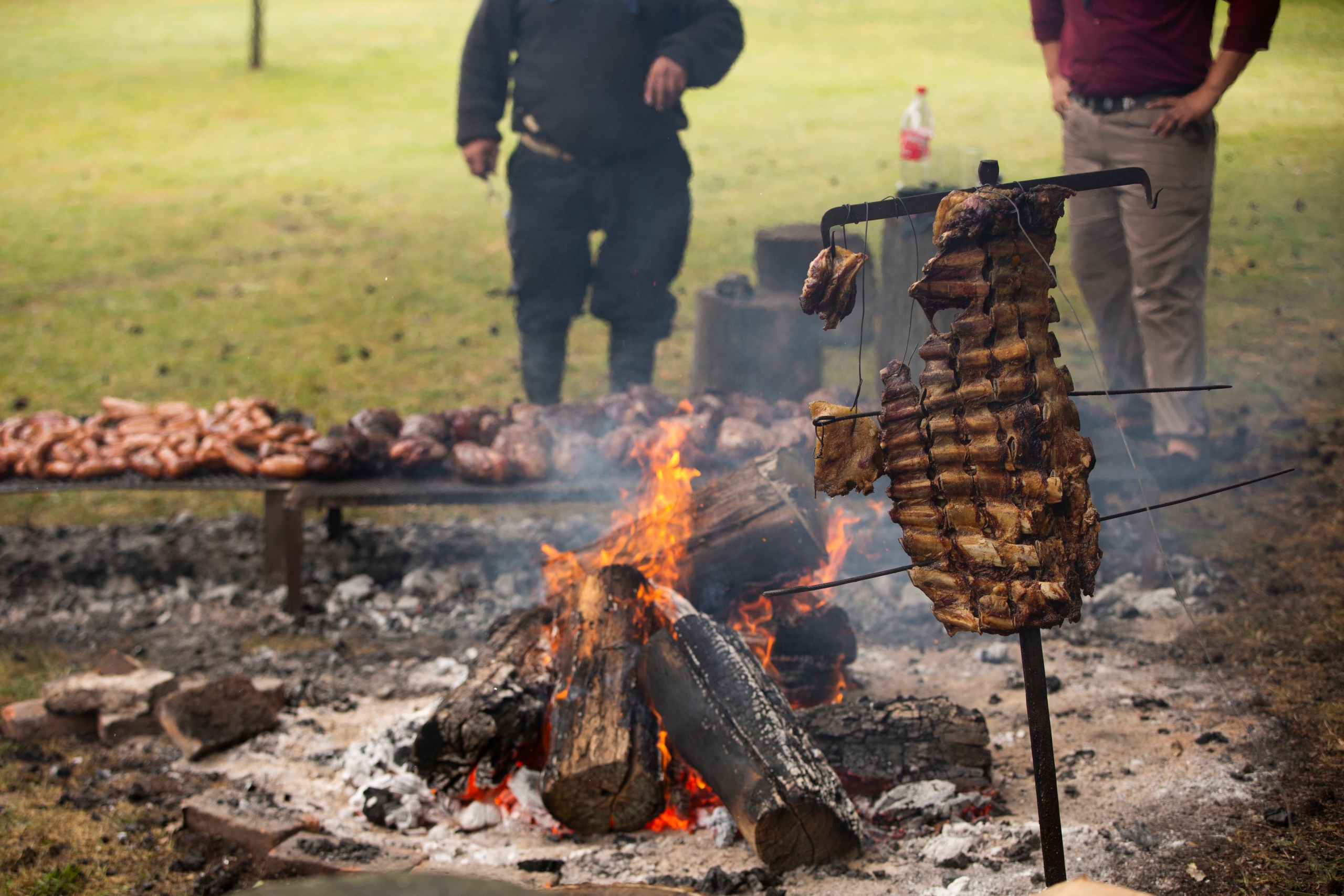
As Argentina industrialized and immigration reshaped its demographics, the open pampas gave way to enclosed ranches, and the gaucho’s nomadic life diminished. Yet the asado not only survived these transformations—it adapted, becoming a fixture of urban life and a marker of national identity.
By the mid-20th century, the Sunday asado had become a cornerstone of Argentine family life. In cities and towns, extended families gathered to prepare and share the meal, transforming a rural custom into a weekly social rite. The figure of the asador—the one who tends the fire—took on symbolic weight, representing continuity and care. At the end of a well-executed asado, it remains customary to applaud the cook: “Un aplauso para el asador.”
A Lexicon of Cuts and Customs
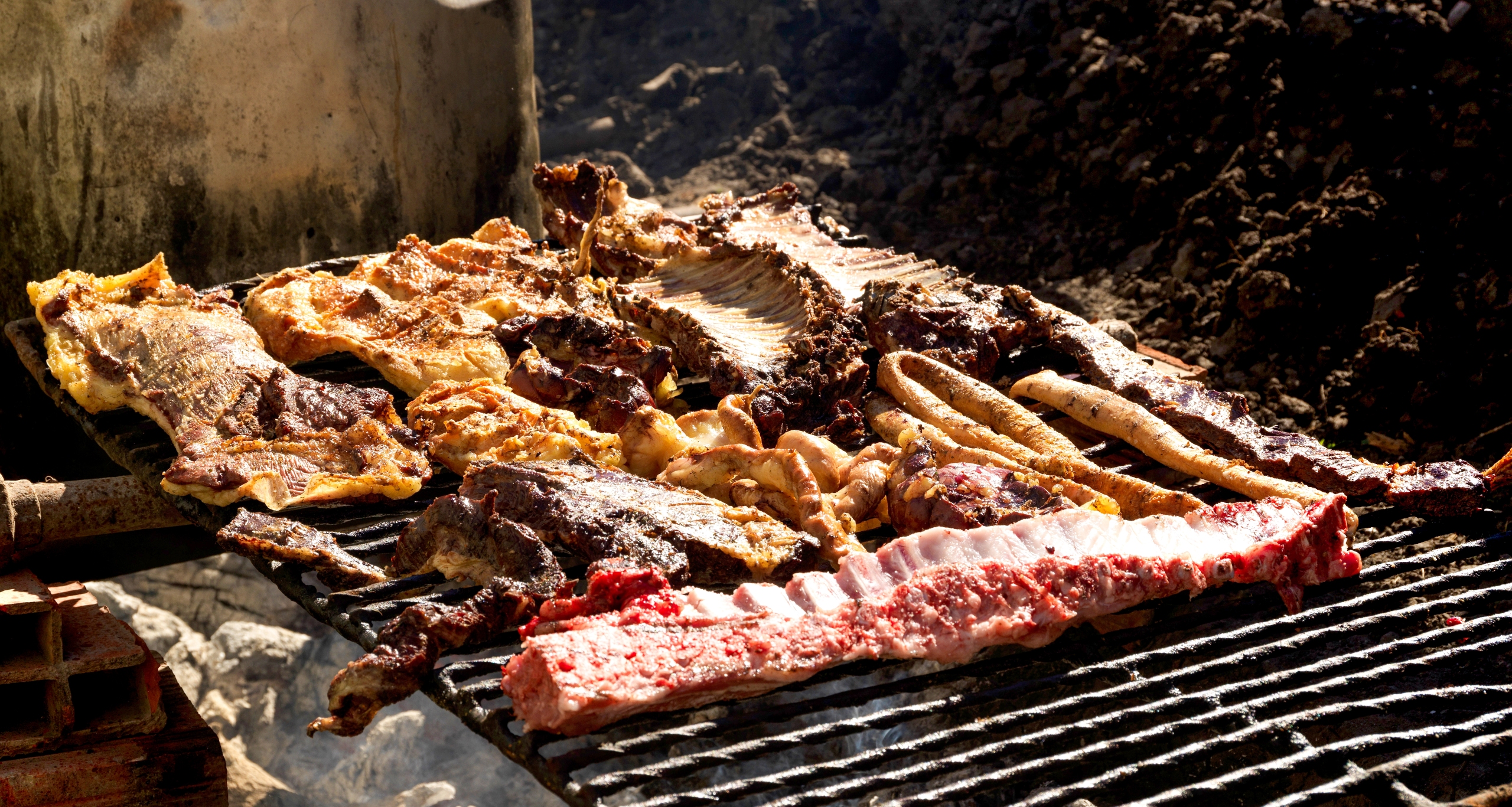
The Argentine asado respects a hierarchy of meat cuts, each with its distinct preparation and flavor. Costillar (rib), vacío (flank), and matambre (thin flank) are all prized, but none is more emblematic than asado de tira—a cross-cut rib known for its rich, fatty texture. Once dismissed as a lesser cut, it became a staple of family tables and reflects the Argentine ethos of finding value where others see waste.
Organ meats—achuras—are another essential component. Kidneys, intestines, sweetbreads, and heart are grilled with the same care as prime cuts, reflecting a philosophy that values the whole animal and discourages culinary elitism.
Chimichurri: The Green Signature
No asado is complete without chimichurri, a tangy green sauce of parsley, garlic, oregano, vinegar, olive oil, and chili. Its origins are unclear—legends speak of Irish, English, and Scottish immigrants whose names were altered by local pronunciation—but the sauce itself has become indispensable. Its rustic ingredients belie a complex flavor that complements the richness of grilled meat with herbal acidity.
The Unwritten Rules of the Fire
The Argentine asado is governed by a set of tacit principles. First: patience. The meat is cooked slowly, often for hours. Unlike rare steak preferences elsewhere, Argentines tend to prefer thorough cooking, which aligns with a meditative, deliberate pace.
Second: only wood or charcoal is used. Gas is eschewed. The fire must be built from scratch, its heat moderated through experience rather than instrumentation. It’s a manual process that resists modern efficiency.
Third: the asado is a collective act. It is not meant to be rushed or eaten alone. Conversation, wine, and storytelling are integral. The meal begins only when everyone is served, reinforcing its role as a social equalizer.
Geography and Adaptation
Argentina’s diverse geography has shaped regional variations in the asado. In the northwest Andes, llama and goat are preferred; in Patagonia, lamb dominates, seasoned by the maritime winds of the southern steppe. Techniques such as asado al pozo (pit barbecue) or asado con cuero (with the hide) reflect local adaptations to terrain and climate. Even in urban settings, the core principles remain intact, whether on rooftop grills or in public parks.
The Asado in Contemporary Life
Today, the asado endures as both tradition and trend. Modern grills are smaller, and ingredients more varied, but the essential rhythm remains: building the fire, selecting the cuts, slow cooking, and shared experience. In an era of fast food and fragmented routines, the asado offers a counterpoint—an event that values time, presence, and connection.
It also coexists with other culinary inheritances. Many Argentine families now combine the Sunday asado with pasta dishes of Italian origin, reflecting the multicultural roots of the nation.
Globally, the asado has captured the interest of chefs and food enthusiasts. Yet what remains elusive outside Argentina is not the technique, but the context: the tempo, the atmosphere, the cultural framework in which the asado is both meal and mirror.
A Cultural Hearth
More than a method of cooking, the asado is a window into Argentine life. It is a practice shaped by migration, geography, and history—offering a rare continuity in a country often defined by flux. Around the grill, distinctions dissolve: rural and urban, elite and working class, native and immigrant
While the gaucho is now largely a figure of the past, his ethos survives in this culinary rite. Today, an estimated 150,000 gauchos continue to work across the pampas and Patagonian steppe. They are the custodians of a living tradition, one that resists easy commodification and speaks to a deeper relationship with land and labor.
Whether in the remote plains or in a suburban garden, the fire is lit. It burns not only to cook meat, but to preserve a shared language—a ritual of sustenance, memory, and identity.
AI Transparency Notice
PilgriMaps uses artificial intelligence tools to assist in the research, drafting and translation of editorial content. All AI-assisted content is reviewed, edited and verified by our editorial team before publication. We contrast information against primary sources, specialist literature and on-the-ground knowledge to ensure accuracy, cultural sensitivity and editorial integrity.
AI is one tool among many in our workflow. The judgement, curation and responsibility for everything published on this platform remain entirely human.
Viator Media S.L. — in compliance with the EU Artificial Intelligence Act (Regulation EU 2024/1689).